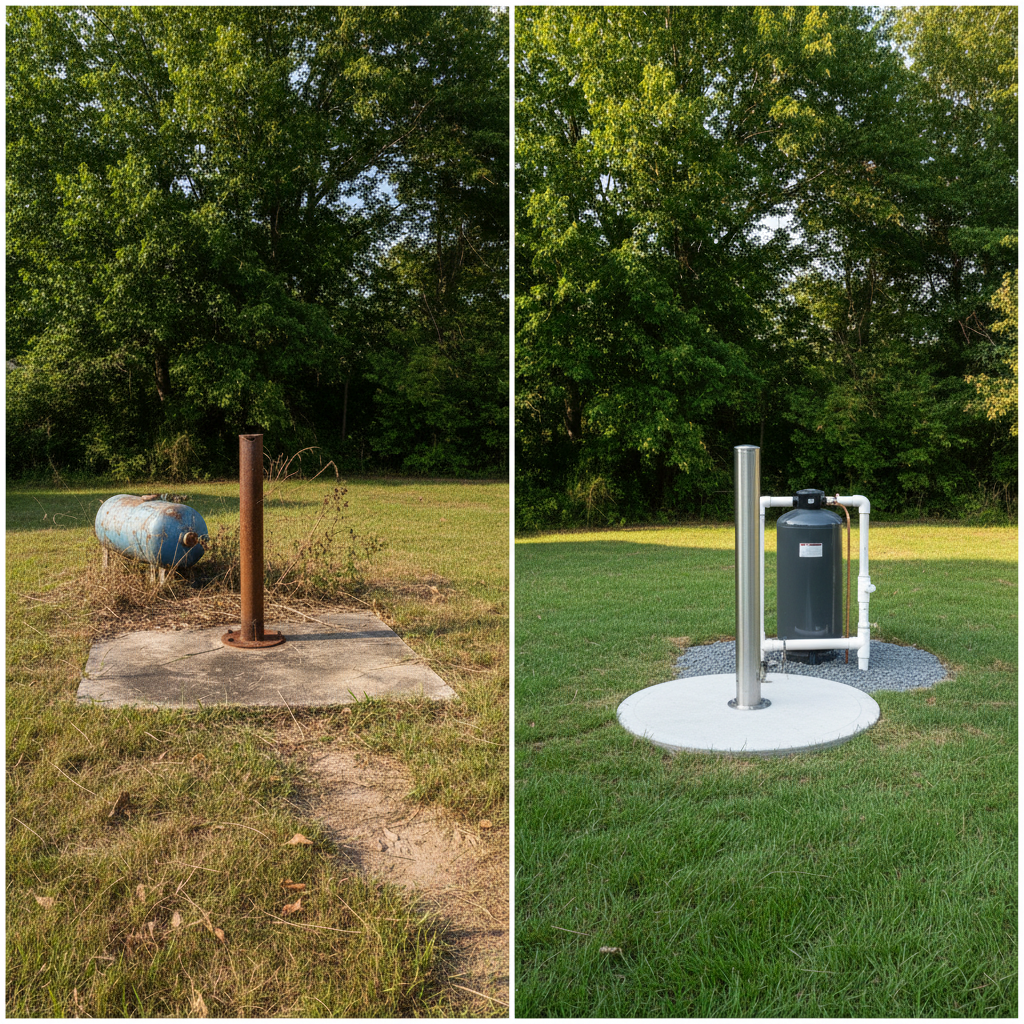
Alright, so you're thinking about getting a well on your property here in Heflin. Smart move, truly. Having your own water source gives you a lot of freedom, doesn't it? But when it's time to actually put that well in, you'll hear about a couple of main ways to do it: a drilled well or a driven point well. Folks often ask me, "What's the difference, and which one should I pick?" It's a fair question, and the answer isn't always simple, but I can tell you what I've seen work best for people around here.
Drilled Wells: The Gold Standard for Reliability
Let's start with drilled wells. This is probably what most people picture when they think of a well. We use a big rig to bore a deep, narrow hole into the ground—often hundreds of feet down—until we hit a reliable aquifer. Then we case it with steel or PVC pipe. That keeps the walls from collapsing and, just as important, keeps surface contaminants out. We drop a submersible pump down there, and boom, you've got water.
- Cost: Upfront, a drilled well is going to cost you more. There's more heavy equipment involved, it takes longer, and we're going much deeper. We're talking thousands of dollars, not hundreds.
- Durability & Longevity: This is where drilled wells really shine. They're built to last for decades, often 50 years or more with the right maintenance. The deep casing protects the water from most surface issues, and you're tapping into a much more stable water source.
- Maintenance: Generally, pretty low. You'll need to test your water periodically, and eventually, that pump will need service or replacement, but the well structure itself is very sturdy.
- Appearance: All you'll see is a well cap or a small well house at ground level. It's pretty discreet.
- Water Quality & Quantity: This is the big one. Drilled wells typically provide a much higher yield of water, and the water quality is generally more consistent and less affected by drought or surface pollution. Around Heflin, especially in areas with a lot of clay or rocky soil, a drilled well is often the only way to get a dependable water supply. You're getting past those shallow, often inconsistent, water tables.
Driven Point Wells: The Budget-Friendly Option (Sometimes)
Then you've got driven point wells, sometimes called sand point wells or shallow wells. These are a different beast entirely. Instead of drilling, we literally drive a small-diameter pipe with a screened point on the end into the ground. It's a much simpler process, no doubt.
- Cost: Much, much cheaper upfront. If you're in the right conditions, you might be looking at hundreds to a couple of thousand dollars, depending on depth and labor.
- Durability & Longevity: This is where they fall short. They're really designed for sandy, permeable soils where the water table is very shallow, usually less than 25 feet. They aren't as tough as drilled wells and can be more prone to issues like clogging, corrosion, or running dry during droughts. Their lifespan is often shorter, maybe 10-20 years.
- Maintenance: Can be higher. The screens can clog with sediment, and because they're shallow, they're more vulnerable to changes in the water table. You might need to pull and clean or replace the point more often.
- Appearance: Similar to a drilled well, just a cap or small enclosure.
- Water Quality & Quantity: This is the biggest gamble. You're drawing from a very shallow aquifer, which means the water quality can be more variable and more easily affected by surface contaminants like agricultural runoff or septic systems. The quantity can also fluctuate wildly with rainfall. If we have a dry summer like we sometimes do, that shallow well could go dry on you.
So, Which One Should You Choose for Your Heflin Home?
Look, I'm going to be straight with you. For most homeowners in and around Heflin, a drilled well is almost always the better choice. I know the upfront cost can be a hurdle, but the reliability, consistent water quality, and sheer longevity of a drilled well usually make it the smarter long-term investment.
We've got a lot of varied geology around here. Some spots have sandy loam, but many areas, especially closer to the Talladega National Forest, are characterized by harder clay and rock formations. A driven point well just isn't going to cut it in those conditions. You'd be wasting your money trying to drive a point through solid rock or dense clay. Even if you find a spot with suitable soil, the risk of running dry or dealing with inconsistent water quality from a shallow source is just too high for most folks who want a dependable water supply for their home.
You want water you can count on, day in and day out, for drinking, bathing, and everything else. That's what a properly installed drilled well from Mighty Well Drilling delivers. You're investing in a reliable water source for decades to come. Give us a call; we can come out, take a look at your property, and give you an honest assessment of what makes the most sense for your specific situation. We've been doing this long enough to know what works here in Calhoun County.