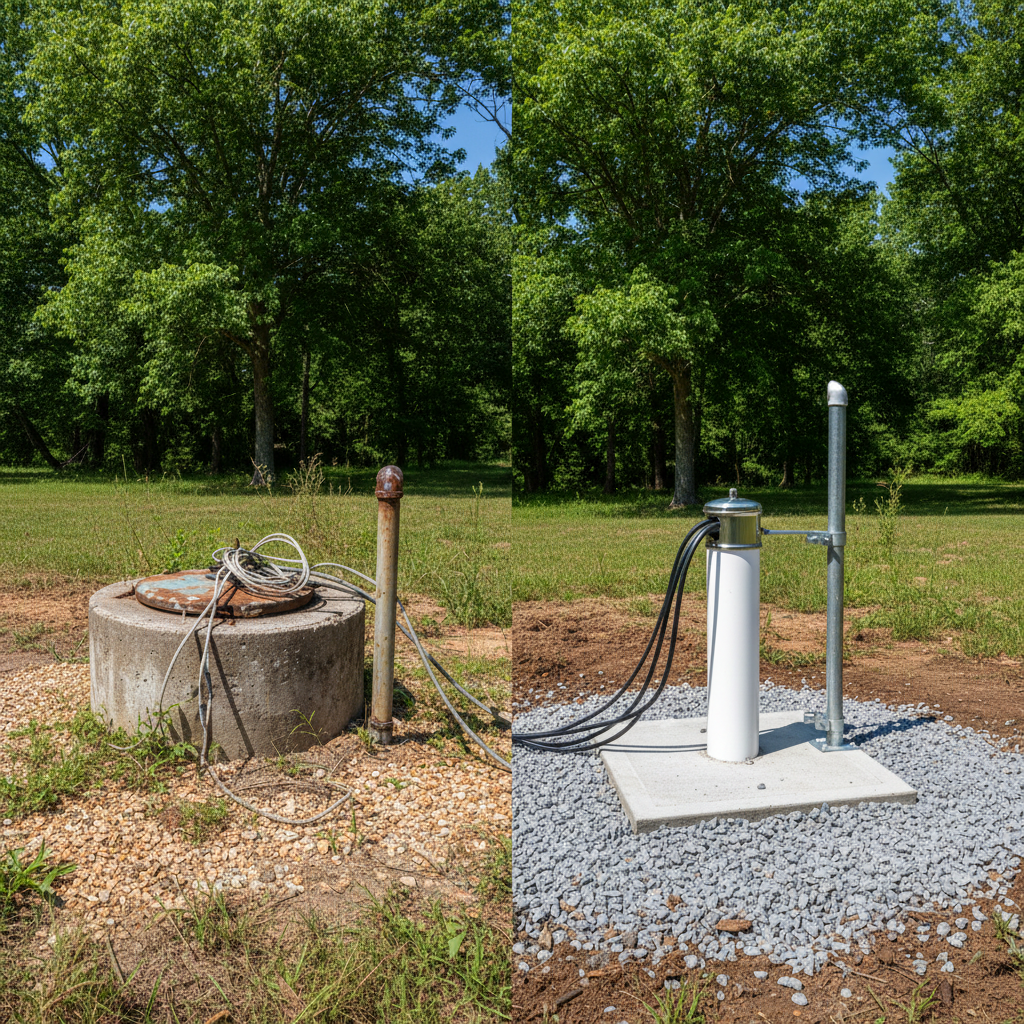
Alright, let's talk about your well. You've got it, it provides your water, and most folks don't think about it much until something goes wrong. But when it comes to keeping that water flowing clean and strong, you've really got two main ways to approach it: either you get proactive with regular cleaning, or you wait until you've got a problem and then you react with a repair. For us folks in Heflin, especially with our red clay and iron-rich water, this decision can make a big difference.
The "Wait and See" Approach: Reactive Repair
This is probably the most common approach, and I get it. Life's busy, and if it ain't broke, why fix it? With reactive repair, you just use your well until you notice a drop in water pressure, some funky smells, cloudy water, or maybe your pump starts kicking on and off too much. Then you call someone like us at Mighty Well Drilling to come out and figure out what's wrong.
Cost & Durability:
- Initial Cost: Low. You aren't spending anything until there's actually a problem.
- Long-Term Cost: This is where things can get expensive. A sudden pump failure, a clogged screen, or a heavily fouled well often means emergency service calls, more complex repairs, or even a full pump replacement. These aren't cheap, and they usually happen at the worst possible time.
- Durability: Your well components might wear out faster. Sediment buildup, mineral scaling (especially with our hard water around the Choccolocco Valley), and bacterial growth can put extra strain on your pump and plumbing.
Maintenance & Appearance:
- Maintenance: None, until there's a problem.
- Appearance: Doesn't really apply to the well itself, but your water quality might suffer, showing up as stains in your sinks or tubs.
The "Stay Ahead of It" Approach: Proactive Cleaning
Now, this is what I recommend for most of my customers. Proactive cleaning means you're not waiting for a crisis. You're scheduling regular maintenance, usually every 3-5 years, to clean out your well, inspect the pump, and make sure everything's running smoothly. This usually involves things like brushing the well casing, surging and pumping, or even chemical treatments to break down mineral buildup and bacteria.
Cost & Durability:
- Initial Cost: Higher, because you're paying for service when nothing's technically broken.
- Long-Term Cost: Generally lower. Regular cleaning can prevent major breakdowns, extend the life of your pump and other equipment, and keep your water quality consistently good. You're catching small issues before they become big, expensive ones.
- Durability: Significantly improved. Keeping your well free of sediment, scale, and biological growth means less stress on your pump, cleaner screens, and a longer lifespan for your entire well system.
Maintenance & Appearance:
- Maintenance: Regular, scheduled service. It's something you plan for, not an emergency.
- Appearance: Your water stays clear, tastes good, and you're less likely to see those rust or mineral stains that are common with untreated well water in our area.
My Recommendation for Heflin Homeowners
Look, I've seen it all in my years of drilling and servicing wells around Heflin. The folks who take care of their wells proactively almost always come out ahead. They spend less money in the long run, they have fewer emergencies, and they enjoy more consistent, higher-quality water.
Our local conditions, especially the iron and manganese that can build up, really make a strong case for proactive cleaning. That red clay isn't just for growing good crops; it also means more sediment can find its way into your well over time. Letting that build up is just asking for trouble down the line.
So, while the reactive approach might seem cheaper upfront, it's a gamble. A well is a big investment, and protecting that investment with regular cleaning just makes good sense. It's like changing the oil in your truck; you don't wait for the engine to seize up before you do it, right? Give us a call at Mighty Well Drilling, and we can talk about setting up a maintenance schedule that works for you and your well.